Locksmith guides
Key hard to turn? Check the key, lock and door alignment
By Neighbourhood Locksmith Service ·
A stiff key does not tell you the whole story. Learn what to observe safely, when to stop, and what to tell a locksmith about an HDB door lock.
A key that has become difficult to turn deserves attention before it leaves you unable to lock or unlock your home. The useful starting point is to notice which key is affected and whether the problem changes when the door is open.
If the key bends, feels as though it might snap, or will not come out, stop applying force. These checks are for a door you can already access; they are not instructions for opening a locked door.
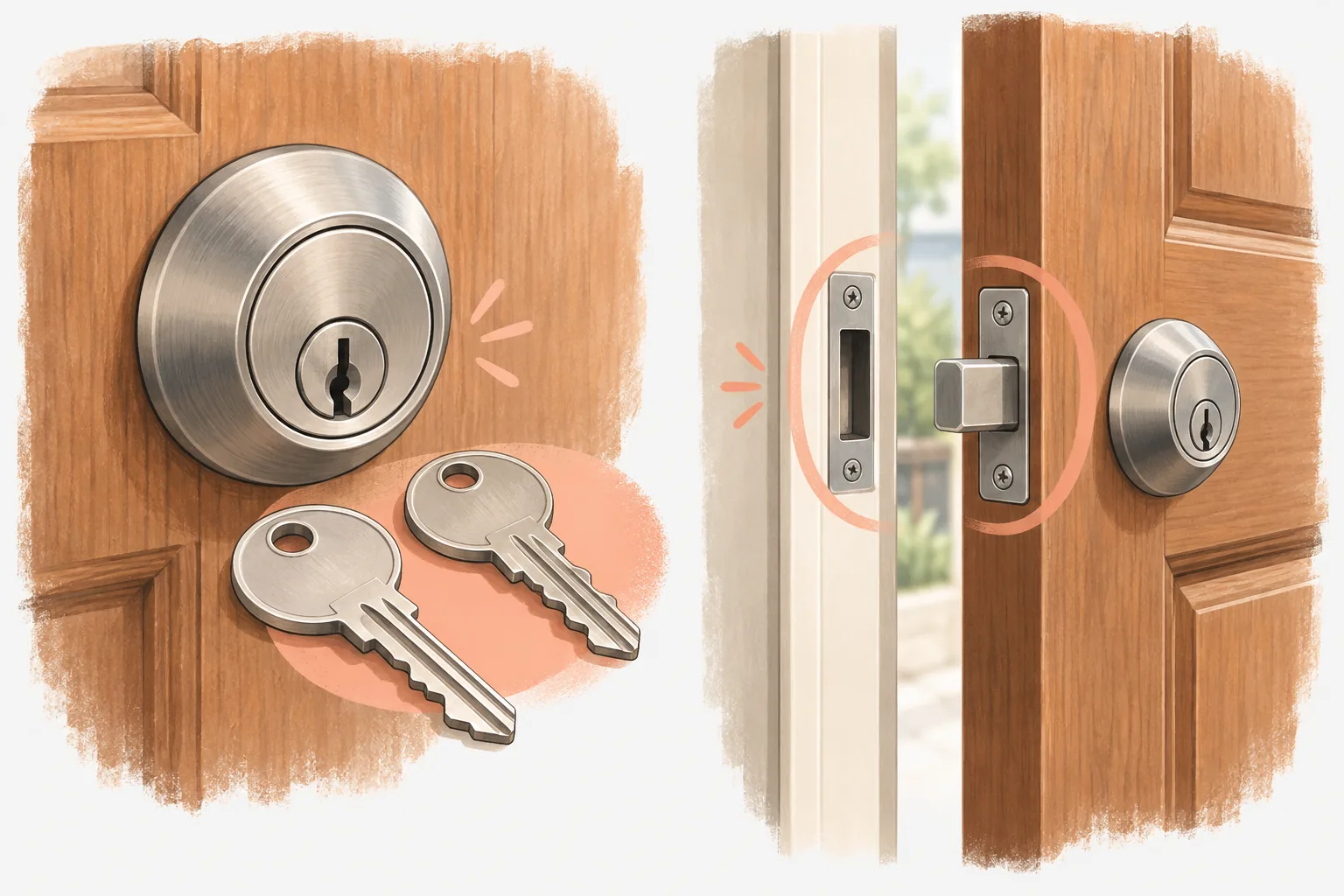
1. Compare the usual key with a working spare
Check that you are using the correct key for that particular door or gate. An HDB entrance can have separate locks, and a similar-looking key is not necessarily the right one.
If you have a spare that normally works, note whether it turns more easily. A difference between two keys is useful information for the locksmith: the condition or cut of a key may be involved. It does not prove that the cylinder is fault-free.
Look for a visibly bent blade, cracks or damage. Do not try to straighten a damaged key with pliers or keep increasing the turning force. Set it aside and arrange an assessment.
2. Notice whether closing the door changes the problem
If the door is already open and you can operate the lock normally without force, note how that feels. Keep a reliable way back inside and do not close a questionable lock just to repeat the test.
Tell the locksmith if the key works smoothly with the door open but becomes difficult when the door is closed. Contact between a bolt and its receiving plate can be an alignment clue. It is not a complete diagnosis: the key, cylinder, fitting and door condition still need checking.
This distinction also appears in Yale’s model-specific alignment troubleshooting. Follow the instructions for your own lock rather than applying another model’s adjustment steps.
If you must lift, pull or slam the door to make the lock work, mention that when booking. Leave drilling, filing the strike plate and changing hinge or closer settings to someone who can assess the complete door assembly.
3. Check the care instructions before adding lubricant
The correct care product depends on the lock. A mechanical cylinder, an external bolt and a digital lock’s electronics are different parts; a product intended for one is not automatically suitable for the others.
Use only a product and method approved for your model. ABUS’s cylinder-care guidance, for example, describes a dedicated maintenance spray and directs users to follow its label. It is not a reason to put an unidentified spray into every lock.
If you cannot identify the lock or its maintenance instructions, ask before applying anything. Lubricant will not establish whether a bent key, damaged component or door alignment issue needs repair.
When to stop checking and get help
Arrange help if the key is trapped, resistance is increasing, the lock feels loose, or the door no longer secures reliably. If you are already locked out, use our lockout guide and contact a locksmith instead of forcing the key or door.
For an HDB main door or gate, our door and gate lock service is the relevant starting point. A useful booking message includes:
- Your general area and whether you are inside or locked out.
- Which lock is affected: main door, gate or another door.
- Whether a known working spare behaves differently.
- Whether the problem changes with the door open or closed.
- The lock’s brand or model if visible. If photos are needed for an enquiry, keep people, house numbers, personal details and access codes out of the frame.
Ask what inspection or repair is proposed and whether replacement is necessary after the fault is identified. If replacement is proposed, our rekeying and replacement guide explains the difference between changing key access and changing the hardware.
Call Neighbourhood Locksmith Service on 8823 8822 to discuss the lock issue and the work you need.